Friday, August 3, 2018

Final Reflection 30A

It might sound a little vain, but I really enjoyed the secret sauce assignment (16) where I had to interview the people who are closest to me and compare how I describe myself to how they describe me. I'm very proud and amazed at how they described me. They had a much more positive light with their comments than my own, but we were all correct I think. I'm also proud of the very first hypothesis test assignment, because I was able to learn about how some people out there run their finances- and it was even worse than I thought.
I have always seen myself as an entrepreneur without an idea. I'm still one of those, but know I know how I could develop and mold one if I got one.
I recommend that students in this class go all out and get into the assignments (treat this class as their venture, because it basically becomes that) and don't be shy to interview people, or to be ignored by people you try to contact. To foster the mindset, watch the dang lectures! They're entertaining!
^das me, jumping out of a plane to show them not to be scared. (also lol my arms)


Venture Concept #2 - Edubanking (2.0)

Image result for entrepreneur venture

OpportunityI. Many online banking websites provide minimal information explaining the banking tools that the bank offers, basic definitions, concepts, and budgeting tools. I've also talked with several people who are frustrated that they can't talk to a real person when they call their bank's number. People these days get wrapped up in credit card debt, the wrong student loans, and various other loans that they don't understand. It can be hard knowing who's financial advice to heed when googling various financial terms. 
II. Banks are facing very low Marginal Propensities to Save (the amount that people save out of every additional dollar of income). Although disposable incomes got a boost from the recent tax break, American's MPS is still only 2-10 cents of every dollar. Every single bank and credit union in the US is facing these low savings rates, which is the money that they are able to loan out and make a profit on (as well as helping growing businesses).

Innovation
I will be selling memberships to my website filled with unbiased topical information. Customers access my website through their bank's website. I will work closely with the initial bank partner (I'll start with my hometown bank that I have a 12 year relationship with) to cover all the information pertinent to what the bank offers, and also common topics such as mortgaging, car loans, student loans, investment types (portfolio analysis) and budgeting. I will offer primarily podcasts, or video lectures similar to Khan Academy. I will also provide links to reliable external sources of information, before I am able to create all the content myself.
The bank has the option to subsidize membership fees for their customers to increase enrollment. There will be small monthly fees of $10 to individuals if they are unsubsidized. No contracts will be implemented.

Venture Concept
My venture meets the needs of those individuals to have a difficult time understanding complex financial tools and options. I will be the credible third party source that their hometown bank has endorsed. For the bank, I will be educating their customers. This education will increase awareness of all that the bank offers, which will contribute to more financially involved customers. The goal will be to help individuals help themselves, and make sure they understand how to make choices best suited for their situation. The competitors are not going to banks directly, and this service will strive to fully integrate itself to the needs of the local bank and local patrons.

My Secret Sauce
The unfair advantage that I have in this first stage of the startup is the long-running relationship I have with my bank as a customer for the last 12 years. I know many people within the bank, and they will be able to help me arrange meetings, know who to talk to, and increase my credibility. This social capital is invaluable, and once I have found success as a partner with them, I will have a success story that can be told (pitched) and replicated elsewhere. This will add MAJORLY to my credibility.

Moving Forward
Once I have proven my venture a success with my hometown branch, I will have the credibility and momentum to open up my services for memberships with other banks. I hope to grow to offer services with 3 banks within the first 5 years.

Living Life
After those 5 years of running a business with a track record of educating and helping individuals AND their banks, I hope to be able to sell off the business to a company with more resources. I will invest the money elsewhere and settle into a different lifestyle without so much travel or podcast recording. 

Feedback Summary
They didn't really give any feedback that suggested changes, but they mentioned what they liked- such as, my opportunity is good, they like that I will start focusing on one customer group in the beginning, educating the public is a needed thing, and that it was a good idea to have low memberships with a bank-subsidized option.

Changes Made
I changed the scale or speed at which I plan to be able to expand my idea to other banks. I want to initially focus on my first customer for a few years before expanding the service to partner with more businesses. Since I plan to sell relatively quickly, I will be trying to make a lot of waves (advertising via PR) with just a few initial customers and adding just a few more employees to help me meet everyone's needs. I added a note about my credibility, and cleared up some explanations in the opportunity and innovation sections.
Image result for entrepreneur venture

Thursday, July 26, 2018

My Exit Strategy

While I do plan to start this business out with my community bank as my first customer, once it grows, I don't think it will be "family business" material. I have other interests and aspirations that match that bill much better, so I do plan to sell the business after five years or so. 
That will be a good time to exit because by then, I anticipate having grown the business quite a bit, and it will be better to hand it off to a group or company that want to manage a larger work force than what I feel comfortable managing, since I'll have a family starting at home.
I don't think that it will SLOW my growth decisions, because it will basically be a goal to grow the business to a point where I need a group of 10+ people, and a larger managing firm. If it was to the point of being sellable before the 5 year mark, then I would take my money and run. I've always been very family focused, and I'd rather have these younger years to spend with children and pursuing land and agriculture-related business ideas. I'm also not into the professional environment that comes with banking, so it will be a relief to relax that façade I will have put on.

Inbound Marketing Reading Reflection

1) What was the general theme or argument of the book?
The general idea of the book is that instead of interrupting customers to advertise your product (and get ignored), you should be engaging them and the entire industry with dynamic (changing, interactive) content on the website, social media, blogs, etc. This will hook potential customers and give them a "soft sell" and increase brand awareness, loyalty, and builds a returning asset. Basically, a company should be half marketing, half publishing content.
2) How did the book, in your opinion, connect with and enhance what you are learning in ENT 3003?
I think EVERYONE who takes this class should read THIS book. I learned so much about how Google works (seriously, why did I not know this stuff?) and about how I should run my future business websites and content. Marketplaces are so different these days, yet we still see a lot of the old-school marketing- how were we to know they're a bad idea, when the new method is so subtle!
3) If you had to design an exercise for this class, based on the book you read, what would that exercise involve?
100%, a great exercise would be to find two websites that are like "brochures" and come up with specific ideas for the types of content they are lacking, find out if they have social media, describe if it was difficult to find all the accounts, AND come up with 5 blog post TITLES that the company should have on their industry blog. 
4) What was your biggest surprise or 'aha' moment when reading the book? In other words, what did you learn that differed most from your expectations?
Like I said, I learned a lot about google and blog post key word optimization, but in addition to that, I enjoyed their case studies about Obama's election and the Grateful Dead. Basically, Obama successfully used inbound marketing by engaging his supporters in many many many forms of social media, and posting things that drove conversation instead of sounding like a megaphone. The Grateful Dead was successful because they created a niche market AND redefined their market's pre-existing "rules" about concerts and album sales.

Pallet Repurposing Failure Celebration

1) Tell us about a time this past semester that you failed

2) Tell us what you learned from it.  

3) Reflect, in general, on what you think about failure. 
After the last Spring semester ended, I started collecting pristine pallets from work to build furniture and potentially make art from. I have experienced a LOT of failures surrounding the 3 completed projects I did. The first was a wine rack. The second was a shelf with hooks for my parent's outdoor shower, and the final was string art on a stained piece of pallet. 

One of the hardest parts of these projects was actually taking apart the pallets. Thankfully I had my boyfriend's shop and shop tools to use... but I still struggled with every method I tried- A) Using a hammer and the back of a framing (large) hammer to pry off pieces from the pallet B) a skill saw C) a reciprocating saw. They were all WAYYYY out of my strength league, but I would slowly get the pieces apart, ruining some along the way and gaining lots of sore muscles.

Once I'd pick a project and have the pieces I needed to use, I also learned how easy I is to 1) nail almost every nail in straight and then bend one so much it makes the hole ugly 2) ruin a few tiny (3/64ths? 1/8th? I forget) drill bits when trying to pre-drill holes for nails so they'll go in straight. 

THEN there was the struggle with mosquitos the whole time. I don't know why I didn't just embrace the bug spray every time I went in the shop, but I should have because nothing would make me call it quits quicker than getting >2 mosquito bites. The shop fan isn't enough to keep those 'squitos away from MY O- blood!

Finally, I had a lot of fun with the wood stain and polyurethane coats, but once again, I just never learned to wear those gloves in the first place. I'd always end up with the stuff all over my hands and fingernails. My boyfriend offered the gloves multiple times, but I guess I just didn't like them even though they would have saved me so much trouble. Sometimes, I'd only wear one, then get the other hand dirty. Other times, I'd take them off and keep working and get dirty. 

I learned a LOT. I obviously learned some basics about working with power tools, what to do and a lot of corrections about what not to do. Unfortunately, I did also learn that I get upset and hard headed extremely easily when Chad would try to correct me. I don't usually have that issue at work, but I remember being that way when I lived with my parents, and apparently now with Chad. I need to take a chill pill and listened to him since he is experienced and knows what he's talking about. I ruined some reciprocating saw blades - but at least they were free- but I would make excuses about why I had bent the blade, when really I just wasn't being conscious enough of the angles I was pushing it. I learned that I have a LONG way to go before I am confident, efficient, or even at all good at making furniture from wood. I did also see that once I have a direction with my project, I will see it through... SLOWLY. 

I also learned that not being able to talk while working in the shop was very obnoxious to me. When Chad would put on the radio I would feel upset and restricted because he couldn't hear me if I wanted to say something. I have the same issue at work with my coworker who listens to a podcast and I get annoyed because I always have to repeat what I say to him.

I chalk most failures up to the learning curve of life. I think it enables me to check my heart at times, because otherwise I wouldn't be so abruptly called to question myself. Failing means I'm doing something wrong, and it's honestly good to be humbled in that way. While it can be frustrating when you realize something isn't as easy as you thought, it doesn't mean it cant be done-- It means you'll be that much more impressed when someone you know is able to help you and show you the right way. I respect the hell out of my boyfriend for knowing what he knows, and being so competent with his hands.

Failure can also sometimes be a closed door. Sometimes you AREN'T meant to keep pushing for something. Maybe soon I'll be doing something else with my time, and this pallet thing will be something that I don't return to; that's totally fine. I already thought that way before this class, and my thinking hasn't really changed.


Friday, July 20, 2018

Venture Concept 1- Edubanking

Opportunity
Many online banking websites provide minimal information explaining the banking tools that the bank offers, basic definitions, concepts, budgeting tools. I've also talked with several people who are frustrated that they can't talk to a real person when they call their bank's number. People these days get wrapped up in credit card debt, the wrong student loans, and various other loans that they don't understand. It can be hard knowing who's financial advice to heed when googling various financial terms, and most want fees up front. Banks are facing very low Marginal Propensities to Save (the amount that people save out of every additional dollar of income). Although disposable incomes got a boost from the recent tax break, American's MPS is still only 2-10 cents of every dollar. Every single bank and credit union in the US is facing these low savings rates.

Innovation
I will be selling membership fees to my website filled with unbiased topical information. Customers access my website through their bank's website. I will work closely with the initial bank partner (I'll start with my hometown bank that I have a 12 year relationship with) to cover all the information pertinent to what the bank offers, and also common topics such as mortgaging, car loans, student loans, investment types (portfolio analysis) and budgeting. I will offer primarily podcasts, or video lectures similar to Khan Academy. I will also provide links to reliable external sources of information, before I am able to create all the content myself.
The bank has the option to subsidize membership fees for their customers to increase enrollment. There will be small monthly fees of $10 to individuals if they are unsubsidized. No contracts will be implemented.

Venture Concept
My venture meets the needs of those individuals to have a difficult time understanding complex financial tools and options. I will be the credible third party source that their hometown bank has endorsed. For the bank, I will be educating their customers. This education will increase awareness of all that the bank offers, which will contribute to more financially involved customers. The goal will be to help individuals help themselves, and make sure they understand how to make choices best suited for their situation. The competitors are not going to banks directly, and this service will strive to fully integrate itself to the needs of the local bank and local patrons.

My Secret Sauce
The unfair advantage that I have in this first stage of the startup is the long-running relationship I have with my bank as a customer for the last 12 years. I know many people within the bank, and they will be able to help me arrange meetings, know who to talk to, and increase my credibility. This social capital is invaluable.

Moving Forward
Once I have proven my venture a success with my hometown branch, I will have the credibility and momentum to open up my services for memberships with other banks. I hope to grow to offer services with 10 banks within the first 5 years.

Living Life
After those 5 years of running a business with a track record of educating and helping individuals AND their banks, I hope to be able to sell off the business to a company with more resources. I will invest the money elsewhere and settle into a different lifestyle without so much travel or podcast recording.

Edubanking's Unfair Advantage


  1. First name basis with most of the staff of my local bank (I've had an account there since I was 10)
    1.  Valuable- This social capital means that they are willing to vouch for me, answer my questions, and just generally help me out because they like me.
    2.  Rare- Many hometown banks have been bought up by larger companies, which makes it harder to cultivate this close relationship (helping them help their customers)
    3.  Inimitable- Very hard to imitate, since this start up process involves the fact that I know these people from childhood, and they know half of my family.
    4. Non-substitutable- It would be much, much, more difficult to get my foot in the door with this bank if I didn't have so many contacts that can vouch for me. 
  2.  Common sense finance skills
    1. This will be the basic level of comprehension that I will try to instill in the end-users of my service. 
    2. These days, it's harder to find people with financial sense.
    3. This is very easy to imitate, there are still people out there with that common sense
    4. Also, it's substitutable. Anyone with that sense could become a teacher
  3. Good speaking voice
    1. Having a voice that people enjoy and can trust will enhance the product
    2. Many people are afraid of public speaking
    3. Everyone is unique, and hopefully my unique voice and inflection will be one that customers are drawn to
    4. There are other good speakers out there.
  4. Good communication skills (to teach concepts, interact with customers)
    1. There is arguably nothing more valuable than being able to communicate one's ideas to others clearly.
    2. This ability is more rare than the previous two
    3. no one else can communicate my ideas for me, and I can explain things in ways others cant, because everyone's mind works differently
    4. Is there a substitute for good teaching? Different styles work for different people, but in general- no.
  5. Lots of practice with professional email correspondence and phone calls (current and previous job)
    1. Practice makes perfect! I've had a few years to get proficient at it.
    2. Not so rare
    3. Polite is polite, but plenty of people out there can write fine emails.
    4. Emails only get a person so far. How much do they really matter? Someone else could write my emails for me.
  6.  Ability to take direction and learn the necessary podcast/general website skills
    1. That "growth" mindset is supposed to lead to success!
    2. A GENUINE good attitude is often hard to find these days (unless you're in a Chick-fil-a)
    3. Has already been done, by places like Chick-fil-a. but this is still an important attribute
    4. One could argue that someone with a degree in IT would be a better replacement for simply being able to LEARN about it on the fly
  7.  My uncle is an accountant and can help me learn to manage my business finances
    1. Accountants do important work. Knowing one who has a vested interest in my success could also be beneficial
    2. I don't have any other uncles who are accountants ;) I don't know any other accountants who would give advice for free or who would work for me very cheap
    3. I could just pay someone to be my accountant, and/or do it myself
    4. No one can replace MY Uncle!
  8.  My boss has experience meeting with high-level businessmen, so he can provide guidance
    1. Etiquette is very important in those settings, someone with experience can give me more pointers and insight than a google search would
    2.  Percentage-wise, not too many people have jobs that require them to meet with many high-level executives from various companies, but that is exactly what Dan's job entails
    3.  Only someone in a similar position to him would have that type of experience, and I've been able to cultivate a somewhat conformable relationship with him. I know I could ask his advice. I don't know anyone else at my company who feels that comfortable with him.
    4. Even those at the career resource center at UF might have INFORMATION to share, but not the experience and real world knowledge that Dan has.
  9.  I have a reliable and fuel efficient car to get me around to meetings
    1. This is valuable in a purely financial way
    2. Not rare at all
    3. Able to be imitated
    4. Non-substitutable, unless someone had excess cash and didn't mind taking flights, Ubers, etc. 
  10.  I have a Surface Pro3 with an i7 processor that's supposed to be fast and able to run many programs at once. I probably will have to create my own website and media to fill the site, so it's good that I have a recent generation computer.
    1. Financially valuable, and just generally helps that I already have this resource.
    2. Not rare
    3. able to be imitated
    4. Substitutable by someone with professional equipment and programs to create websites- but they charge. 
I bolded my most important advantage- #1! I think the runner ups are all the other social capitals: my boss and my Uncle!

Friday, July 13, 2018

Elevator Pitch #3


https://www.youtube.com/watch?v=GvrV-AUGdrU&feature=youtu.be

https://youtu.be/GvrV-AUGdrU

 ^Either one of these links should work!


A lot of the negative feedback I got on my second pitch was about the video quality, which I figured out how to improve on my computer’s camera. I was surprised how much praise I got for changing my idea slightly to be marketed more for individuals, not just their bank. They said my pitch improved, but I still had that good slow delivery. They said I should work on not shifting back and forth so much. One person said he liked the postcard props.


I was definitely more comfortable in front of the camera this time! I made my pitch less wordy and more to the point this time (although it was only 10 seconds shorter), and it wasn’t memorized, but it was pretty similar to my second pitch’s format. I kept the post card props, although I still think I could do something better than that. I was able to brighten the camera settings for this pitch, and put the camera in a better location and angle.


Thursday, July 12, 2018

Reading Reflection #2

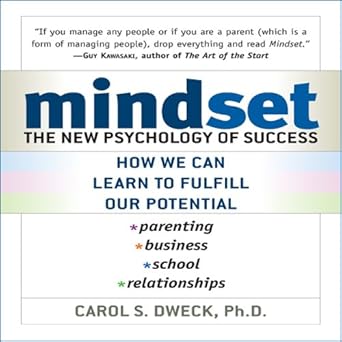
1. The author, Carol Dweck, explains that people's mindset is the difference between success and people who never improve, change, or find contentment. There are two types of mindsets: fixed and growth. Talents are driven and determined by beliefs that people have about themselves and their ability to change. The better growth mindset drives those people to accept and learn from criticism , mistakes, and go outside their comfort zone for the sake of self-improvement. Personal growth is an important source of fulfillment. This mindset can be applied in every area of a person's life. 

2. This book enhances my understanding of the role of mindset in ENT3003. When talking about a firm's cultural values, including these concepts could help improve the mindset of the employees. Values such as "self-improvement," or simply "growth" embody the mindset that Dweck writes about. If everyone tried for the growth mindset, positive attributes could abound.

3. A good exercise to go along with this book's lesson (literally, the single lesson in the book) would be to make a list of 20 FIXED attributes you have, then make a list of 10 attributes that you could use some work on.

4. Honestly, I was really surprised with how obvious the points in the book were, and the second half was ridiculously repetitive. I had trouble focusing on it, and ended up skimming the story after story of success (or failure), all determined by mindset. Maybe I just have a growth mindset! This was taught to me by everyone around me- at Sunday school, my parents, the 7 Habits in Elementary School, common sense, etc. That was my biggest surprise.

Growing My Social Capital


1. Stephen Dubner is my favorite podcaster. He makes 'Freakonomics Radio,' and 'Tell Me Something I Don't Know' podcasts. In this way, I would consider him a supplier or domain expert because I want my product to primarily include Podcasts.
On the Freakonomics official website, Dubner and his partner's email is found under the 'About' tab. I emailed him an attachment of my elevator pitch, along with praise for his podcast and book that I've been a fan of for years, and questions about what creative ideas he might have for how to market, sell, and change my business idea.
Stephen Dubner is an economist who thinks outside the box in many ways, and has a great understanding of how people and entire industries behave. I think he could provide great creative feedback on my business idea. I emailed him on 7/10/18, and haven't heard back yet.


2. Matthew Brown is an old friend of mine who works at Northwestern Mutual. He has gone through their training program and is EXTREMELY knowledgeable in all-things-Finance, especially because he is working on his BS in Finance at UF! He is my market expert because they have also trained him on how to relate to and sell to customers who need financial advice or management help. I talked to Matt in person on Tuesday because we already had a meeting planned (Mi Apa, then talking personal finances). I asked him about the difficulty level of broaching the sensitive topic of finances with strangers, the difficulty in convincing them they need help (in my case education), and he brought up the fact that many people express some desire to learn, but won't make time for it in their schedules. The return expectation was nothing, because I was meeting him for his benefit (it's his job). He provided good insight and I know I can come back to him for further advice and support since we do have a friendship.

3. Brinks Security (Phil __?__) - I seized my opportunity while in the Publix on 34th Street and talked to one of the Brinks employees. He was pretty taken aback, but I explained that I just needed to ask him a question or two for a college class I'm in. I asked him if he thought it was possible for me to implement my business idea, with the customers using the same login as their online banking account... as in, is that legal or feasible? He didn't really have an answer (it wasn't a great question), but he kind of thought it sounded iffy... I'm thinking it's iffy too, but I never asked any of the bank managers about that issue. This person was not quite the right person for me to contact, although I'm sure that he would be willing to get me in contact with his boss, or I could have just sent another email to someone.

Reflection on my "Targeted Networking" (For all 3)
I think that in the future I will be more mindful of who and how I'm targeting people that I want advise from. Email is too slow, approaching strangers is not a good use of time, and contacting people I already know can only get me so far. In the past I've mostly met people through common connections, or when we attend the same events or meetings, in this experience I had to specifically seek them out for my needs. It really wasn't hard to ask for favors, but putting myself out there (sending the pitch, and approaching Phil) was pretty embarrassing.
153154074007/13/201811:59pm

Friday, July 6, 2018

Elevator Pitch #2

Elevator Pitch #2 or https://www.youtube.com/watch?v=RAqhJQf8Y-k&feature=youtu.be

^Watch my Elevator Pitch!


My classmates were very encouraging, so I decided to do MORE of what they complimented. They said that it was good how I curried my name into the pitch, that I spoke slowly and deliberately with good expression. They also liked my little “asides”, and statistics. Looking back, I realize that I should be making the pitch to investors, not the small bank I’m eventually going to be working with and selling to (thanks, Dr. Pryor for that info). Also, I have slightly changed my idea to charge a small fee to the end user, so my arguments for why the customers will want to use my information will have to change to reflect the new customer. I pitched as if I had been doing the business for a while, and now I need funds to expand.
(Source: https://www.investopedia.com/ask/answers/060415/how-does-marginal-propensity-consume-united-states-compare-other-countries.asp )
Thanks for listening!

Idea Napkin #2


You. 
I am good at baking, public speaking, maintaining professional relationships. I have had a good amount of business relationships because of my job with the Fastenal Company. I know how to write formally, compose appropriate emails, inventory and task/time management, phone calls, dealing with customer and vendor orders. 
I think that my original idea would require too much travel (to see bank headquarters, etc.) and I don't have any experience with making websites or apps.


Before Fastenal I worked at an ice cream shop, and as a telephone interviewer. All of my jobs involve communication and customer service, so I think that my startup should rely heavily on my own ability to communicate ideas and information clearly, and help people out there who need advice. If I work on building a relationship with one specific bank, focusing all my energy on their customer’s needs, and rely on customer purchases to prove my worth, I could then expand my business by adding additional staff and more customers.


What are you offering to customers? 


I am offering customers the ability to better educate themselves through my website filled with podcasts, additional resources, and possibly blogs or other media relating to important financial information. The topics will be applicable to people during many life stages- wanting a loan, homebuying info, investing info, etc. The banks will have a link to my website, where their customers can use the information by logging in with their bank credentials. The banks will subsidize their customer’s memberships so that fees will be as low as $5 month Per participating customer, while the bank pays a flat rate of $200/month, no contract or pressure.


Who are you offering it to? 


Initially, I will focus on a single local bank interested in helping their customers be educated on their investing and savings opportunities. It is in the banks' best interests to encourage their customers to save more money, invest with the bank, or understand the loans they might take out with the bank. Credit unions are more localized and typically more involved in helping their community. Once I have the support of the bank or credit union 1) with a core value of helping their customers/community, 2) without a great website in terms of educational resources. I can advertise the services through their website to their customers for that low per-user rate.


Why do they care? 


I know that I could find customers because educating those who bank with them would lead to mindfulness when saving (they would know the benefits, reasons why, and ways to save), a higher likelihood of participating in other products like CDs (if they know what a CD, etc. are), and it sets them apart from other banks/unions for a price lower than creating the website (especially podcasts) themselves. Due to the high involvement with their communities that smaller banks have, it should be natural for them to embrace my services. The end users will also appreciate the reasonable rates and all will benefit.


What are your core competencies? 


I have my vision & my honesty. I am pretty good at speaking in front of a group, and communication in general- especially written. I think that I could create the podcasts, after studying the content- and I speak with good expression.
I have a couple good relationships with my local bank tellers and sales people, but that wouldn't really help me when in front of the higher-ups who could decide to use my website. I could use my relationship and repour with my District Manager (Fastenal) to ask his advice on how to approach the necessary meetings. He has years of experience pitching to important people and building such business relationships.


I think that in some ways I am complicating my project by planning on working with a bank and the bank’s customers at the same time, but that close relationship could give me excellent feedback on what features and services my product needs to have. In this initial start up process, focusing so strongly on the bank to client relationship can help me figure out if it is more viable to sell to banks or to end users once I continue to expand my business.


Feedback Memo-


My classmates were very supportive, and they made me realize that there were some clear changes that should be made based off of the information I provided in the first Napkin. I said that I didn’t have  a lot of webpage experience; they said I could learn. This made me realize that the competencies I already have should be MORE of my focus- I really do need to be the one making the podcasts, answering the chat feature, etc. I also mentioned that I don’t like to travel, so I didn’t like the idea of having to go meet banking executives- with my classmate’s help I realized that I don’t need to start this business that way. I should focus small and local, like I’d rather, and sell to the end user AND small bank.